

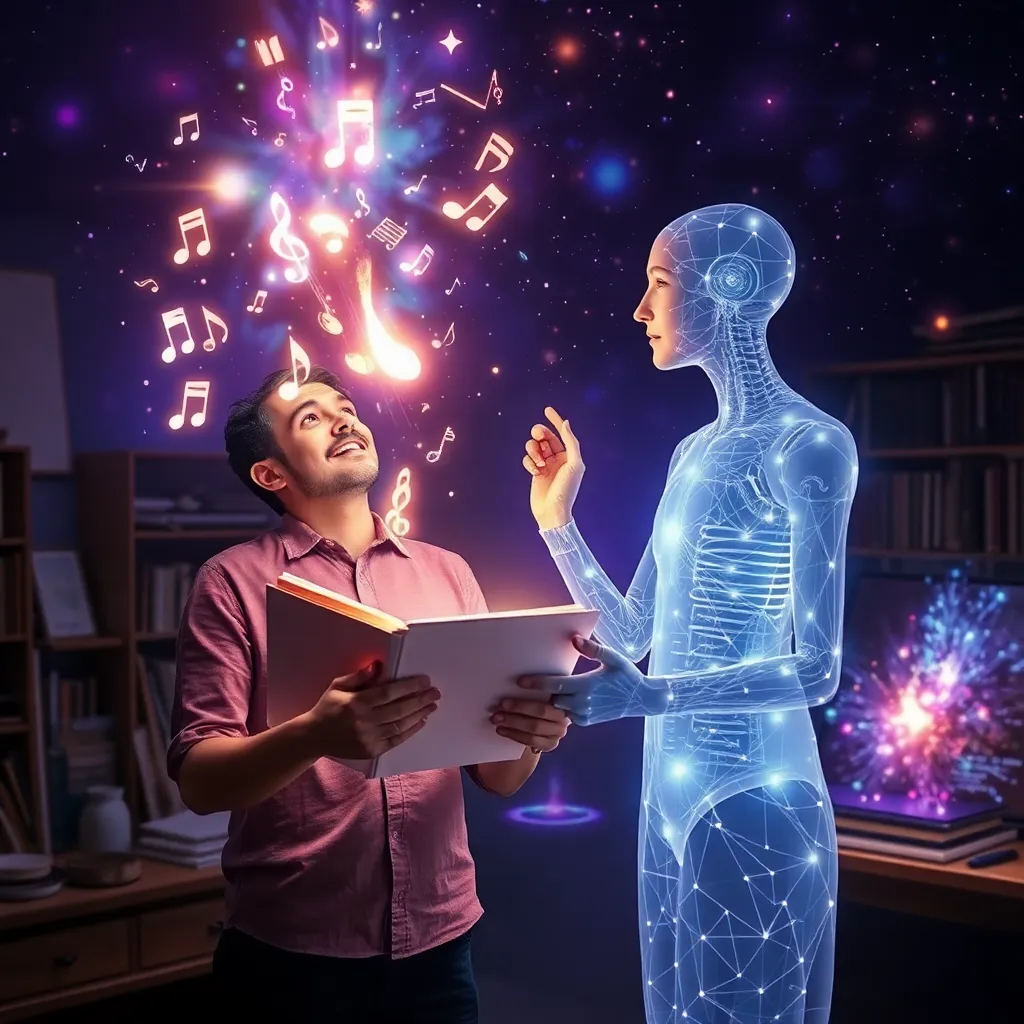
The Unseen Muse: When Digital Companions Spark Human Creativity
There’s a quiet revolution happening in studios, writers' rooms, and home offices around the world. It doesn’t involve protests or picket signs—just creators sitting before screens, conversing with something that doesn’t breathe, yet somehow breathes new life into their work. This is the era of creative partnership with digital entities, and it’s changing what we make and how we make it.
Beyond the Tool: From Instrument to Collaborator
We’ve always used tools to create. A painter’s brush, a musician’s instrument, a writer’s pen—these are extensions of human intention. But what happens when the tool begins to suggest, respond, and even challenge? We’re no longer just using instruments; we’re collaborating with partners that bring their own peculiar kind of creativity to the table.
Unlike traditional tools that merely execute commands, these digital collaborators operate in the realm of suggestion and variation. They’re like jazz musicians who listen to your melody and respond with an unexpected harmony that makes you hear your own idea in a new way. The composer Holly Herndon created an entire album with such a partner, treating it not as a tool but as a vocalist with its own distinct characteristics and contributions.
The Creative Conversation: How It Actually Works
Collaboration begins with what I call the “creative conversation”—a back-and-forth between human intention and digital response that feels less like programming and more like dialogue.
In Music: The Endless Variations
Musicians are finding particularly fertile ground in these partnerships. You might feed a melody into your digital collaborator and receive back:
- Five alternative harmonizations
- Three different rhythmic interpretations
- Unexpected instrumentation suggestions
- Melodic developments you wouldn’t have considered
These aren’t replacements for human creativity—they’re provocations. They’re the musical equivalent of a writing partner asking “What if your character did this instead?”
In Visual Arts: The Unexpected Palette
Visual artists report similar experiences. You might start with a concept sketch, only to have your digital partner suggest:
- Color schemes from artistic movements you hadn’t considered
- Composition adjustments that create more dynamic tension
- Hybrid styles that blend your approach with unexpected influences
These suggestions often come from outside the artist’s usual patterns, pushing them beyond their creative habits and preferences.
In Storytelling: The Narrative Expander
Writers working with digital collaborators describe something remarkable: a partnership that helps overcome creative blocks by offering:
- Plot developments that maintain consistency while introducing novelty
- Character voice suggestions that remain distinctive yet authentic
- Worldbuilding details that create richer, more coherent universes
It’s like having a co-writer who never sleeps, never runs out of ideas, and remembers every detail of what you’ve already written.
Why This Changes Everything (Without Replacing Anything)
The most common fear about digital creativity is replacement—the notion that these technologies will make human creators obsolete. But what practitioners are discovering is precisely the opposite: these tools are making human creativity more essential than ever.
The Curator’s Rise
When you have infinite variations and suggestions, the most important skill becomes curation—the human ability to recognize which ideas have soul, which variations serve the emotional core of the work, and which suggestions should be discarded despite their technical cleverness.
The Intention Amplifier
These collaborators excel at generating possibilities, but they don’t have intentions. They don’t care if the story moves readers to tears or if the music makes people dance. The human creator remains the keeper of meaning, the source of emotional intent, and the final arbiter of what serves the work’s deeper purpose.
The Creative Mirror
Perhaps most fascinatingly, these digital partners serve as mirrors for our own creative minds. By seeing how they interpret and develop our ideas, we learn about our own patterns, preferences, and blind spots. They show us what we consistently choose not to consider, what we automatically reject, and where our creative habits might be limiting us.
Real-World Partnerships: Creators Speak
Across creative disciplines, practitioners are embracing these collaborations:
Musician Taryn Southern created an entire album using digital composition partners, describing the process as “collaborating with a creative entity that has its own perspective.”
Visual artist Anna Ridler uses algorithmic partners to generate variations on her initial sketches, creating dialogue between her human aesthetic and the digital partner’s interpretive patterns.
Writer Robin Sloan has spoken about using narrative collaborators to break through writer’s block, comparing it to “having a writing partner who can generate endless what-if scenarios.”
Getting Started: How to Begin Your Own Collaboration
If you’re curious about exploring this type of creative partnership, here’s how to start:
- Begin with a strong intention—these tools work best when you have a clear creative direction
- Learn to ask good questions—the quality of output depends heavily on how you frame your requests
- Embrace the unexpected—be willing to follow interesting suggestions wherever they lead
- Maintain your editorial voice—remember that you’re the final decision-maker
- Iterate and refine—view it as a conversation that improves with practice
The Future of Co-Creation
We’re still in the early days of this creative revolution. As these technologies evolve, we’ll likely see more nuanced collaborations, more intuitive interfaces, and deeper integration into creative workflows.
But the fundamental truth will remain: the most exciting creations will come from partnerships that leverage both digital suggestion and human intention. The future belongs not to digital creators or human creators, but to the space between them—where something new emerges from the conversation.
The Human Heart Still Beats
In the end, these digital collaborators are like unexpected muses—sources of inspiration that come from outside our usual patterns. They can suggest, variation, and develop, but they can’t replace the human heart at the center of creation.
The most beautiful outcome of this technological development might be how it reminds us what makes human creativity special: our ability to infuse work with meaning, emotion, and intention. The digital partner might generate the notes, but the human decides which ones make music.
Perhaps that’s the ultimate creative partnership: between the one who generates possibilities and the one who chooses which possibilities matter.