

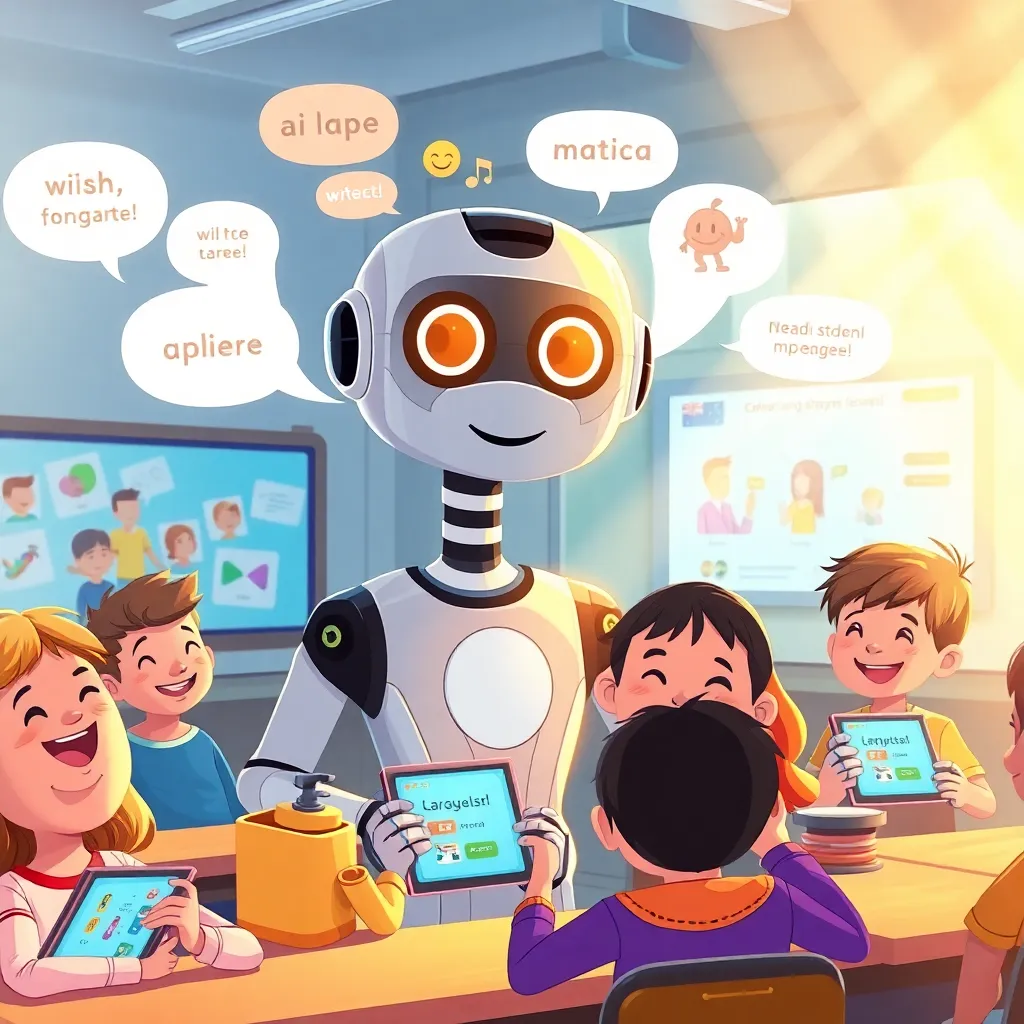
Forget Textbooks: How Conversational Characters Are Revolutionizing Language Learning
Remember sitting in a language class, repeating phrases that felt disconnected from real life? “The pen is on the table.” “Where is the library?” Useful, perhaps, but hardly inspiring. For decades, language education has been trapped in the grammar-translation method or dull memorization drills—effective for some, but soul-crushingly boring for many.
But what if you could learn French by debating philosophy with a digital Voltaire? Or practice Italian by ordering espresso from a friendly bot barista in a simulated Roman café? This isn’t science fiction. It’s the new reality of language learning, powered by dynamic, responsive characters designed not just to teach, but to engage, entertain, and empathize.
Why Traditional Language Learning Often Fails
Let’s be honest: most of us have quit a language. We started with enthusiasm, bought the workbook, downloaded the app, maybe even attended a few classes. But then life happened. Motivation waned. The lessons felt repetitive, generic, and—worst of all—lonely.
Language is social. It’s emotional. It’s lived. Yet so many tools treat it like a puzzle to solve, not a world to enter. We learn vocabulary lists and verb conjugations in isolation, then wonder why we freeze when a real person asks us a question.
What’s missing? Context, connection, and conversation.
Meet Your New Tutor: A Character, Not a Curriculum
Enter the conversational character. These aren’t chatbots in the traditional sense—they’re personalities. They have backstories, moods, accents, and quirks. They remember what you’ve said, adapt to your mistakes, and respond in real time.
Imagine:
- Practicing business English with a savvy London-based mentor who corrects your emails gently.
- Learning Mexican slang through a humorous dialogue with a digital artist from Mexico City.
- Exploring German culture with a friendly tour guide who shares stories about Berlin’s history.
These characters don’t just teach you phrases—they immerse you in situations. You’re not memorizing; you’re participating.
The Magic of Low-Stakes Practice
One of the biggest barriers to language fluency is fear. Fear of sounding foolish. Fear of making mistakes. Fear of judgment.
But a character doesn’t judge. It encourages. It corrects without condescension. It lets you experiment, stumble, and try again—as many times as you need.
There’s no audience. No grade. No awkward silence. You can ask the same question five different ways, practice pronouncing “r” in Portuguese until your tongue feels twisted, or restart a conversation as often as you like. It’s patient, personalized, and perpetually available.
Learning Through Story and Scenario
Abstract lessons fade; stories stick. Conversational tutors excel at wrapping language lessons in narratives. You’re not learning the past tense—you’re helping a character solve a mystery using clues from yesterday. You’re not studying food vocabulary—you’re choosing ingredients for a virtual cooking show.
This method mirrors how we learn our first language: through context, repetition within meaningful situations, and emotional engagement. We remember words better when they’re attached to experiences, even simulated ones.
Tailored to You: Adaptive Learning That Feels Human
The best digital tutors observe your progress and adjust in real time. If you’re struggling with subjunctive mood in Spanish, your tutor might pivot to a review exercise disguised as a storytelling game. If you’re breezing through greetings, it might skip ahead to more complex social scenarios.
This responsiveness makes learning feel less like a lecture and more like a dialogue. The character isn’t just following a script—it’s listening, analyzing, and responding to you.
Not a Replacement—A Bridge
It’s important to say: these tools aren’t meant to replace human teachers or real conversations. Instead, they serve as a bridge. They build confidence, reinforce fundamentals, and provide practice opportunities that are often hard to find—especially for less commonly taught languages.
Many learners use conversational tutors for daily practice, then take that confidence into interactions with native speakers, language exchanges, or formal classes. The character prepares you for the human.
The Future Is Conversational
We’re at the beginning of a shift in how we learn languages. The focus is moving from memorization to interaction, from rigidity to flexibility, and from isolation to immersion.
The next time you think about learning a language, ask yourself: Do you want to study a textbook? Or do you want to share stories, laugh at jokes, and navigate scenarios with a friendly digital companion who’s available anytime, anywhere?
The choice is becoming clearer—and much more fun.
You don’t have to learn alone. You don’t have to learn in silence. With the right companion, every conversation is a lesson, and every lesson feels like a conversation.