

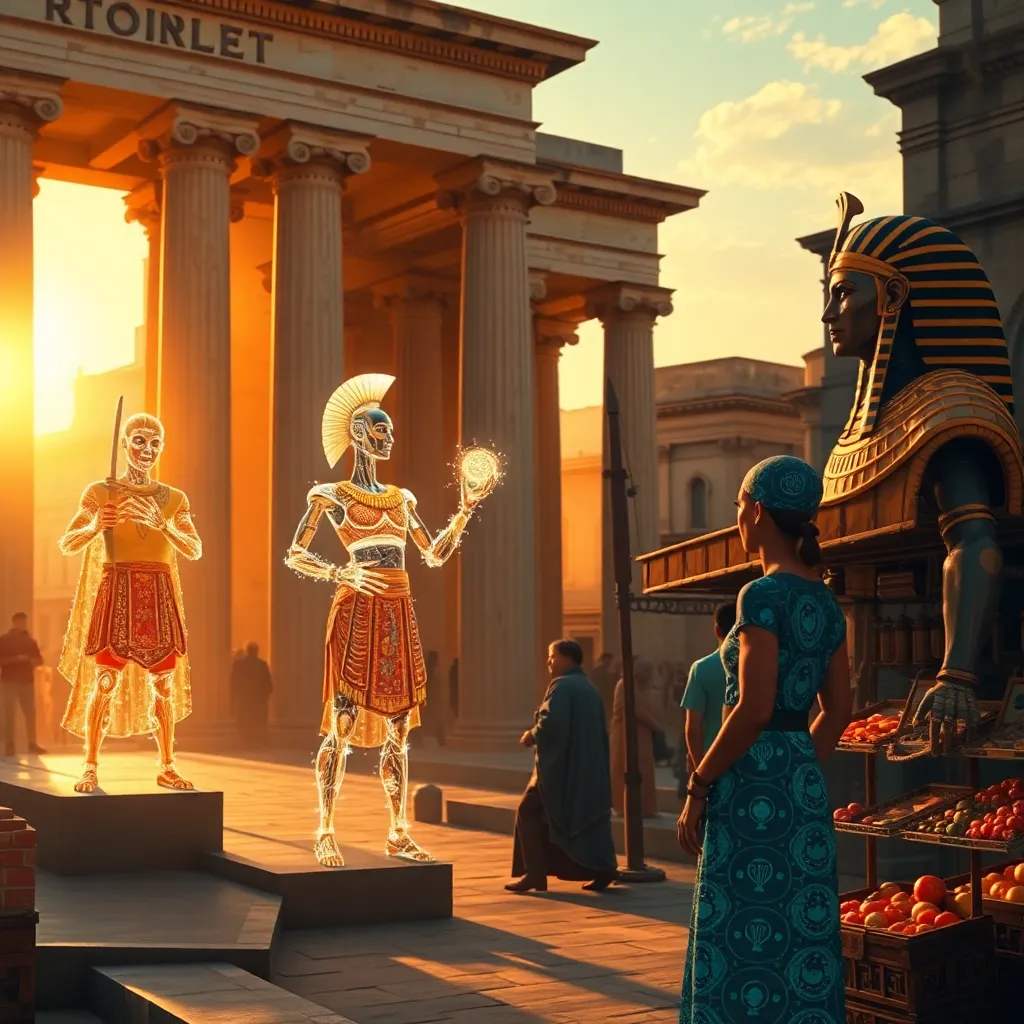
Stepping into the Past: How AI Characters Bring History to Life
Have you ever stood in a museum, staring at a weathered statue or an ancient manuscript, and wondered what it would really feel like to walk in their world? To hear the clamor of the Roman Forum, smell the incense in an Egyptian temple, or feel the weight of a knight’s armor? For centuries, we’ve relied on books, films, and reenactors to bridge that gap. But now, something extraordinary is happening: artificial intelligence is opening a door—not just to observe history, but to live it.
Why History Needs a Voice
History, as it’s often taught, can feel distant. Dates, battles, treaties—it’s easy to forget that these were moments lived by people who laughed, loved, feared, and dreamed much like we do. Traditional reenactments help, but they’re limited by location, cost, and scale. You can’t always fly to Rome to watch a gladiator duel, or pop into a medieval village for a conversation with a blacksmith.
That’s where AI steps in. By creating interactive, conversational characters rooted in historical settings, we’re not just learning about the past—we’re engaging with it.
The Magic of AI in Ancient Worlds
1. Rome: Politics, Power, and Philosophy
Picture this: You’re seated across from a digital incarnation of Cicero. He’s not just reciting lines from De Officiis; he’s responding to your questions about justice, duty, and the chaos of the late Republic. He might challenge your views, quote Seneca, or even gossip about Caesar’s ambitions—all in fluent, context-aware dialogue.
This isn’t a pre-scripted chatbot. Advanced AI models trained on historical texts, speeches, and societal norms can emulate the thought patterns, values, and even the humor of the era. Want to debate stoicism with Marcus Aurelius? Or strategize military campaigns with Scipio Africanus? Now you can.
2. Medieval Europe: Chivalry, Craft, and Conflict
Medieval times often get reduced to castles and crusades, but daily life was rich with texture—artisans, monks, troubadours, and farmers each had their own stories. With AI, you can step into those roles:
- Learn parchment-making from a monk scribe.
- Discuss courtly love with a troubadour.
- Hear a blacksmith explain the symbolism behind a knight’s sword.
These interactions aren’t just informative—they’re immersive. The AI character adapts to your curiosity, offering deeper dives into topics you care about, all while staying true to the worldview of the time (yes, that includes believing the earth is flat, if that’s era-appropriate).
3. Ancient Egypt: Rituals, Rulers, and Reality
Ancient Egypt fascinates us with its pyramids, pharaohs, and gods, but how much do we really understand about the people who built this civilization? An AI-powered priest of Ra could walk you through temple rituals, explaining the symbolism behind each offering. A scribe might teach you hieroglyphics while complaining about his busy day. Cleopatra herself could detail the political intricacies of her reign—not as a mythical figure, but as a shrewd leader navigating a crumbling dynasty.
The key here is authenticity. These AI entities are built on extensive research—they draw from translations of papyri, archaeological findings, and historical records to ensure they don’t just sound ancient; they feel ancient.
How It Works: The Tech Behind the Time Travel
Creating a believable historical AI character involves several layers:
-
Research First: Before any coding begins, historians, linguists, and cultural experts compile accurate data—from speech patterns and social hierarchies to common myths and daily routines.
-
Language Modeling: The AI is trained on period-appropriate language. For example, a medieval character might use Middle English idioms, while a Roman might pepper conversations with Latin phrases.
-
Contextual Awareness: These characters understand their own “world.” A Roman senator won’t reference gunpowder; a medieval knight won’t quote Shakespeare. The AI stays in character, reinforcing the illusion of time and place.
-
Emotional Depth: Beyond facts, these bots simulate personality. Is your Egyptian scribe impatient? Your Gothic bard melancholic? Those traits shape how they interact with you.
Why This Matters Beyond Entertainment
This isn’t just about cool tech or gamified history. It’s about empathy.
When you debate with Cicero, you’re not memorizing dates—you’re understanding the tensions of a republic in crisis. When you speak with a medieval peasant, you grasp the human impact of feudalism. These experiences make history visceral, relatable, and memorable.
Educators are already using such tools to spark curiosity in students. Museums are integrating them into exhibits. Writers and filmmakers use them for research. Suddenly, history isn’t a dry subject; it’s a conversation.
The Limits and Ethical Questions
Of course, there are challenges. AI can only work with the data it’s given—gaps in historical records might lead to omissions or inaccuracies. There’s also the risk of oversimplifying complex societies or perpetuating stereotypes.
Moreover, should we “resurrect” real historical figures? Is it ethical to simulate a conversation with someone who can’t consent? These are important debates, and they remind us that while AI can emulate, it should never replace respect for the past.
Your Turn to Step Into History
We’re at the beginning of a revolution in how we experience history. Whether you’re a student, a hobbyist, or just someone who’s ever dreamed of walking through the Agora of Athens, AI characters offer a chance to do what once seemed impossible: touch the past.
So next time you wonder what it was like to hear the roar of the Colosseum or whisper a prayer in Karnak, remember—the past might just be a conversation away.